
ROBERT BURNS: TUNE UNKNOWN - Katherine Campbell
Review by George Monger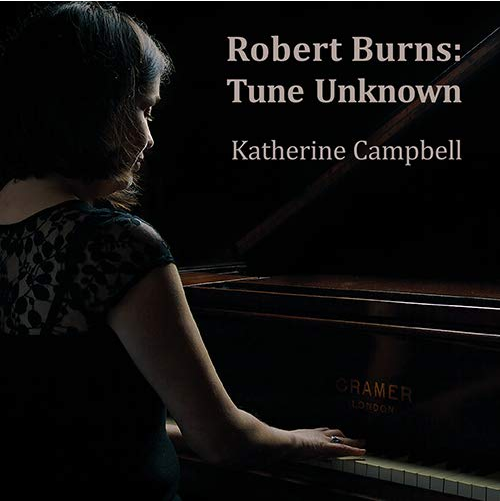 Many of the poems of Robert Burns are obviously written with a tune in mind, usually a traditional tune, and many Scottish artists, such as Dougie Maclean, Dick Gaughan and Nigel Denver, have recorded familiar Burns songs. Katherine Campbell, who comes from a family of traditional musicians, is well steeped in the tradition of Scots songs which she has brought to the study of Burns’ songs and poems (with Dr Emily Lyle of Edinburgh University – their work is being published in a book Robert Burns and the Discovery and Re-creation of Scottish Song).
Katherine has taken ten Burns poems which have been identified as being originally written as songs, but for which the melody has been lost, and composed new melodies with a piano accompaniment. This is the reversal of Burns’ usual practice of writing words to extant melodies apart from one known example of Burns composing an air ‘in the old Scotch style’ for the poem O, Raging Fortune’s Withering Blast. However, he was unable to write the tune down properly so it was never performed and the imperfect notation lost; Burns apparently was not unhappy about the loss, writing in his journal “….and perhaps ‘tis no great matter, but the following were the verses I composed to suit it.”
Here we have a set of songs with new settings, performed beautifully and with obvious affection by Katherine Campbell with quite an understated and sympathetic piano accompaniment. Most of these poems will probably be unfamiliar to someone who is not a Burns aficionado and it may take a little time for non-Scots to understand the dialect words (although there is a good glossary in the accompanying booklet). I enjoyed this album and Katherine’s lovely performances, but I think it is one to dip into, there are few contrasting tempos and I did occasionally find my concentration mind wavering. One for the Burns enthusiast I think.
 It was with some trepidation that I played this CD not knowing Innes Watson’s work let alone his guitarcolloquium project. I was concerned that I wouldn’t like it and I hate being negative about an artist's work. However, I need not have been concerned, from the very start the collaboration of Glasgow based musicians, led by Innes Watson, sound very tight; the quality, style and performance of the music is, to me, characteristic of musical collaborations I have heard in Scotland
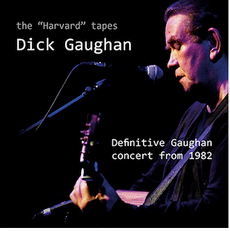 Dick Gaughan has been off the road for the last three or so years after an MRI scan in October 2016 showed that he had suffered a stroke several months earlier. Recently tapes of a Dick Gaughan in concert in Cambridge Massachusetts in 1982 have come to light. Hearing the tapes Ian Green and Ian McCalman of Greentrax Records, Edinburgh agreed that they were vintage Gaughan performances and decided to release the recordings on CD to help raise money to support Dick in his recovery.
 This is the first full length album from East Anglian young musician Finn Collinson. An interesting and varied collection played by Finn on mainly alto and tenor recorders, also whistle, guitar, bouzouki, mandolin and vocals. Other musicians called in to assist on the album are Emma Beach (oboe, cor anglais, vocals), Archie Churchill-Moss (diatonic button accordion, guitar), Josh Clark (percussion, electric bass), Ronan Collinson/Katriona Gilmore (fiddle), Jonno Gaze (drums, percussion) and Tom leader (double bass, guitars). However, this is not a huge band effort and the musicians are used as tastefully as possible enabling Finn to shine as the main musician. The album does make a blistering beginning with full band tune set January Walk, there are two trad songs, Hanging Johnny and Banks of the Nile, sung by Finn and Emma, and a lovely version of the Rankin Family’s Orangedale Whistle, which, as Finn explains in the notes, is a song accepting and embracing change, something we must all do. He has included his own composition Folkeast Waltz, dedicated to John and Becky Marshall-Potter who, by creating the annual Folkeast Festival, have done much to promote local and national folk music in East Anglia. My particular album favourites are Black Mountains, Finn’s own composition played simply on recorder and Emma’s cor anglais, and Tune for the Bullfinch, from the 1717 Bird Fancyer’s Delight, beautiful overdubbed alto and bass recorders to imitate birdsong, merging into real garden birdsong. There are echoes of Flook and 1990s Irish band Diesel in the album, but this is an album focusing, unusually, on the recorder, where Finn has developed his own style. Call to Mind is testament to Finn being rightly considered as one of our area’s foremost young folk performers.
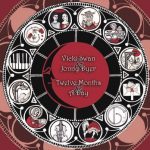 Vicki Swan & Jonny Dyer blend traditional material with contemporary sounds. Their performances showcase new interpretations of old songs alongside original self-penned tunes and new contemporary songs that are entirely at home in the tradition.
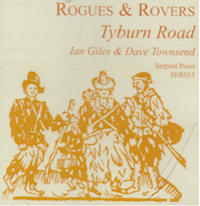 Tyburn Road is a project which unites two of Oxfordshire’s best known folk performers and has given rise to this CD of songs and tunes arranged in three sections, Rakes, Sailors,and Country Pursuits. Accompaniment is provided, where needed, with Ian playing melodeon and Dave playing an assortment of English style concertinas. A chorus is provided by The Eynsham Crew.